
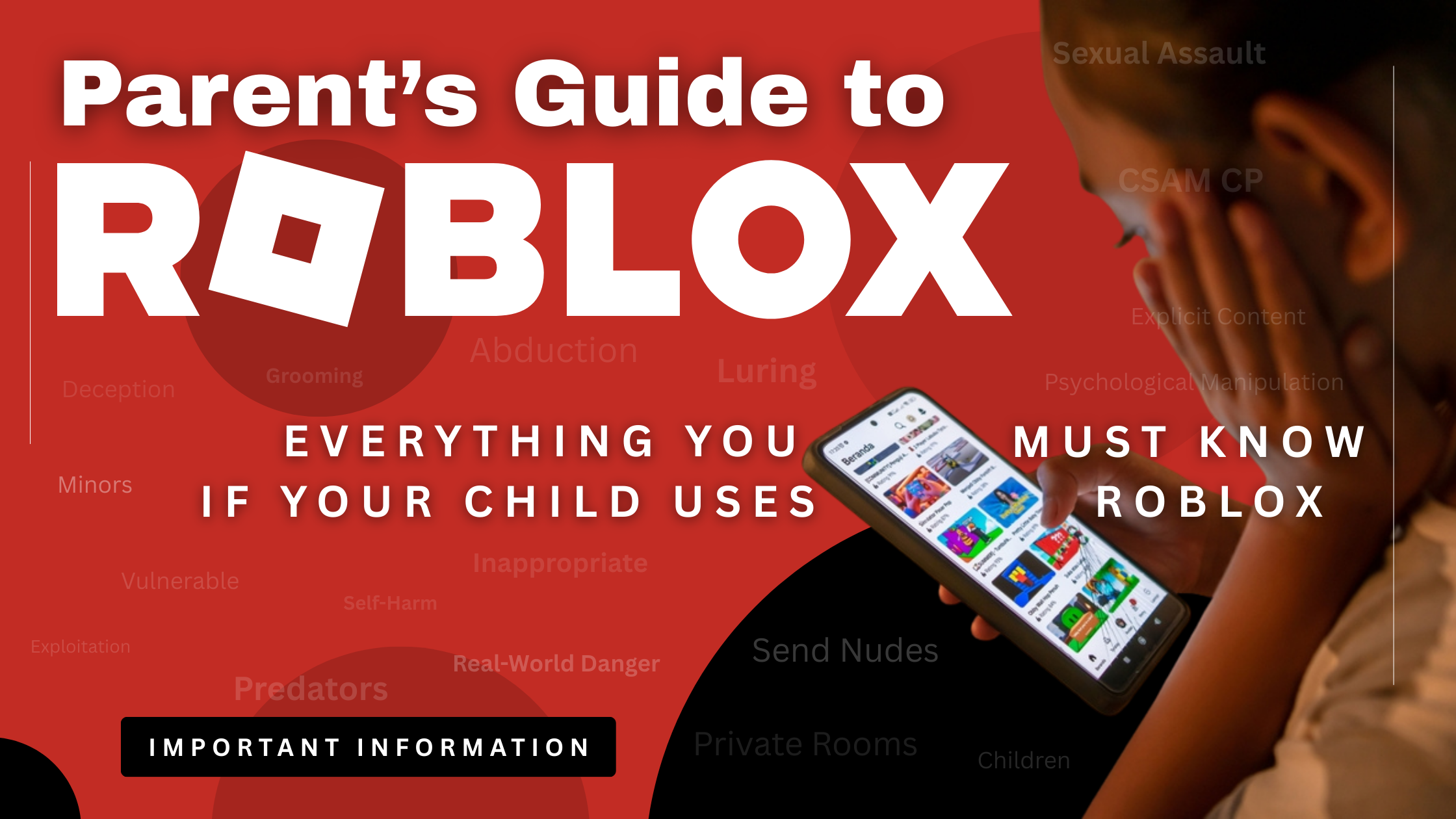
Roblox is facing lawsuits for being a metaphorical playground for online sexual predators who are targeting your children for grooming, sexual exploitation, sextortion, and in-person meetings.
If your children use Roblox, you CANNOT skip this article. I guarantee you do not know as much about Roblox as you might think you do.
You likely have no idea what is really going on on the Roblox platform. The first thing that boggles the mind is that Roblox has almost 100 million daily active users (DAU). Of those, 39 million are children under the age of 13. Additionally, there are between 40 and 400 MILLION ROBLOX EXPERIENCES; there are so many that the company can’t possibly oversee a fraction of them.
The experiences they are failing to properly moderate include sex clubs, strip clubs, cruising areas, bath houses, areas where predators can pay your child (in Robux) to spend time together in a private room, and pretty much anything else you can think of that would horrify you. There’s also nazi stuff, games where you kill babies, white supremacy dog-whistles, and on and on. Roblox is a complete hellscape of depravity; or, I should say, parts of Roblox are. Do you know what your child is doing on Roblox every moment they are on their?
Dolman Law Group is currently providing free consultations to parents who believe their child was seriously harmed on Roblox. To discuss your potential claim with a Roblox Child Abuse Lawyer, contact us today.
Remember those sex clubs I mentioned? Would you believe that many of them and other experiences just like them have no age restriction? See the video below.
Why Does Roblox Need a Guide for Parents in the First Place?
The short answer: Roblox is a very dangerous place for kids.
Roblox is more complicated than you think, has no moderation, is super popular with kids, puts a huge emphasis on money, has tons of loopholes for adults and kids to exploit, and is “a pedophile hellscape for kids” according to Hindenburg Research, an internet investigative institute.
Plus, your kids are probably more tech-savvy than you are. Because of this, minors are using coded language, workarounds, backup accounts, and other things you have no idea about, like downloading and using other apps to continue questionable behavior away from their parents, Roblox moderators, and parental settings.
Roblox isn’t just a game; it’s a digital universe. And it’s very, very popular with ALL age demographics.
Kids can create games, play games other people create, socialize with friends, and meet new people all in one place. On the surface, the platform is creative and social. But the freedom that makes it fun also opens the door to serious risks.
Without setting up proper protections, Roblox is like letting your kid go on vacation by themselves to a place that is known to harm children and has very little supervision.
How Many Adults and Children Use Roblox Every Day?
You need to understand how many people use Roblox and the age of those users. I have determined these numbers using Roblox’s own data from January to March 2025 (Q1). In my opinion, if you took this information on its own, it would be pretty disturbing.
Roblox Daily Active Users (DAUs) Worldwide
| Worldwide Roblox Users | ||
|---|---|---|
| Age Group | Number of Daily Active Users (DAUs) | Percent of Total Users |
| All Ages | 100 million total people | 100% of all DAUs |
| Adults 18+ | 41 million adults | 41% of all DAUs |
| 13-17 years olds | 22 million teens | 22% of all DAUs |
| 9-12 years olds | 22 million tweens | 22% of all DAUs |
| 9 years old or less | 15 million children | 15% of all DAUs |
Roblox Daily Active Users (DAUs) in the United States
| U.S. & Canada Roblox Users | |
|---|---|
| Age Group | Number of Daily Active Users (DAUs) |
| All Ages | 18 million total people |
| Adults 18+ | 7.2 million adults |
| 13-17 years olds | 4 million teens |
| Under 13 | 6.8 million children and tweens |
| Total # of Minors | 10.8 million |
With there being a total of about 50 million children aged 6-17 in the US (we are assuming 3-year-olds aren’t on Roblox), and 10.8 million American children in that age group, that means that 1 in 5 American children use Roblox EVERY DAY!
*Source for Roblox Stats and Data
1. All The Ways Roblox Can Seriously Harm Your Child
This list outlines the risks children may face on the Roblox platform, broadly categorized for clarity.
A. Sexual Exploitation and Abuse Risks
Predator Access & Identity Deception: Bad actors pose as children or manipulate their profiles to appear harmless so they can initiate contact with minors.
Grooming and Off-Platform Luring: Predators build trust with children through in-game chat and then pressure them to move conversations to unmoderated third-party apps (e.g., Discord, Snapchat, WhatsApp) where abuse is more likely to occur.
Exposure to Explicit Content & Environments: Despite content filters, children under 9 can access sexually suggestive “experiences” (user-created games) or encounter explicit content often mislabeled with inappropriate age ratings.
Robux-Driven Exploitation: Predators use the platform’s virtual currency (Robux) to coerce children into sending explicit content or performing sexual acts, threatening to expose them if demands aren’t met. This also includes broader sextortion tactics where threats to distribute private images (including AI-generated ones) are used to demand more content, money, or even self-harm.
Self-Generated Child Sexual Abuse Material (SG-CSAM): Children are coerced into creating and sharing images or videos of themselves that are child sexual abuse material.
Exploitation of In-Game Features:
- Predators can make their avatars look extremely provocative using Roblox customization.
- Role-play scenarios are built into the game.
- Avatars can be made to do odd actions like pushups, hip thrusts, and hundreds of other movements that can be modified to basically make your character do whatever they want with another character.
- Finally, private rooms can be locked to exclude others and create isolated interaction spaces.
These are just a few of the ways that predators are using Roblox to potentially harm your children.
Real-World Danger: Online grooming can tragically lead to real-world abduction or assault when predators arrange to meet children in person. There have been dozens of documented cases, including rapes.
Virtual Sexual Assault: Simulated sexual acts between avatars within the game have been reported.
Psychological Manipulation: Children are vulnerable to psychological manipulation in avatar-based social games, which can be part of the grooming process. Anyone can make their avatar look however they want, they can write in any style they like, and the avatar’s age and sex are shown.
B. Systemic Safety Failures
Inadequate Age Verification: Roblox’s systems don’t reliably verify user ages, allowing adults to interact with and potentially target minors or for children to access age-restricted content.
Circumvented Safety Measures & Filters: Anyone with a little bit of determination can easily bypass existing safety features through simple workarounds, making them ineffective against sophisticated predatory tactics.
Poor Moderation & Delayed Responses: The platform struggles with consistent and effective moderation, resulting in inappropriate content and slow or inconsistent responses to abuse reports. This allows harmful content and users to remain active sometimes for extended periods.
Weak Reporting Systems: Despite having reporting mechanisms, they are compromised by delays, lack of transparency, and inadequate follow-up, potentially discouraging victims or parents from reporting further incidents.
C. Other Ways Roblox May Be Hurting Your Children
Addictive Behaviors: The platform’s design often incorporates mechanics that can lead to excessive use and video game addiction, especially in vulnerable young users.
Data Collection and Privacy Violations: Roblox allegedly collects extensive user data (including children’s digital activity, IP addresses, keystrokes, and mouse movements) without proper disclosure or consent, potentially violating child privacy laws like COPPA.
Financial Exploitation: This includes not only scams but also aggressive in-game purchase mechanics, gambling-like features tied to Robux, and allegations that the company allows third-party Robux gambling sites.
Child Labor Exploitation Allegations: There are concerns that Roblox’s economic model benefits the company more than child creators (who develop most of the platform’s content), who may face unfair terms to convert their earned Robux into real money.Negative Mental Health Impact: Online exploitation, cyberbullying, or addiction on the platform can lead to serious psychological distress, including anxiety, depression, shame, and in extreme cases, suicidal ideation or self-harm.
In-game Third Party Ads: Third-party ads within experiences on Roblox, some of which may be inappropriate for children or link to external sites, expose young users to content and commercial pressure beyond Roblox’s direct moderation.
2. Understanding What Roblox Is: More Than Just a Video Game
Roblox Is Not Just a Game
Most people hear “Roblox” and assume it’s a single game — like Minecraft or Fortnite. But it’s not. Roblox is actually a massive online platform made up of millions of individual games, experiences, and social spaces. Think of it more like the “YouTube of video games” — where users create the content, and other users come play it.
Roblox Is an Open World Where People Play as Themselves
When kids log into Roblox, they aren’t picking a pre-written character in a pre-written story. They’re showing up as themselves — just in avatar form. They choose their own outfits, usernames, and where they go. Once they’re in, they can walk around, talk to real people (via chat or voice), and jump between different experiences with a single click.
That’s part of what makes Roblox feel so real to kids. It’s not just “playing a game.” It’s hanging out, exploring, meeting new people, building things, and being whoever they want to be — in a world full of other people doing the same.
Users Can Create Experiences and Mini-Games on Roblox
Roblox gives users (even kids) free tools to create their own games, spaces, and interactive worlds. And millions of them do. That’s why Roblox has everything from simple obstacle courses (called “obbies”) to pet simulators, fashion contests, murder-mystery roleplay games, fake schools, “Brookhaven” neighborhoods, dance clubs, dating hangouts, and more.
There’s no one “main” Roblox game. Your child might spend 15 minutes playing a tycoon simulator, then jump into a social hangout, then visit a fake high school, then try an anime battle game — all in one session. It’s all user-generated and constantly changing.
Roblox Is Extremely Popular With Children
There’s a reason Roblox is everywhere — especially in elementary and middle school circles. Kids love it because:
- They can be creative and express themselves.
- There’s always something new to try.
- They can play with their real-life friends, even if they’re not in the same room.
- They can make new friends online who like the same stuff.
Roblox Is Just Like The Real World
With nearly 100 million daily users and hundreds of millions of additional accounts who play occasionally, this isn’t just some fringe app. It’s one of the most heavily used platforms in the world.
Really, it’s like a giant city that your child is running around in, talking to strangers, hanging out with friends you don’t know, and experiencing new things that are someone else’s idea, usually an adult’s.
Would you let your kids do any of those things in real life?
3. Reasons Why a 100% Ban May Not Be the Best Option
Let’s be real, navigating the world of online gaming with kids is complicated as hell. Trying to regulate what games your children play, what they see online, and what happens on social media can feel like an impossible task. Parents today are the first generation to face a challenge that’s anything like the internet, which means there’s no playbook from past generations to lean on.
So, sure, slapping a complete ban on something like Roblox might seem like the easy and safest solution. However, there can be some real drawbacks you should think about.
But, banning your kids outright from Roblox—or from anything that might be dangerous, for that matter—may actually mess with your kid’s social and emotional development more than you realize.
Protection is necessary, but so is parenting your child to prepare them for the real-world.
It’s not about leaving kids exposed to harm; it’s about teaching them how to handle it. Especially on the internet, and especially on platforms that expose your children to strangers, like Roblox. The better approach is usually guided exposure: setting boundaries, staying involved, and talking through risks, rather than shielding them from every single possible danger.
Social Ostracization and Peer Relationships
Here’s the thing: Roblox is everywhere in modern childhood. I mean everywhere. A complete ban basically isolates your kid from their friends and peers, and that’s not good. When pretty much everyone in your child’s social circle is talking about and playing a particular game, being the one kid who can’t participate? That leads to feelings of loneliness, shame, and being the “weird one.” It also makes it super hard for them to join in social conversations and understand what their friends are experiencing together.
Fostering a Sense of Distrust and Lack of Control
An outright ban, especially if you just drop it on them without any real discussion, makes a kid feel like they have zero control over their own life. And guess what? That breeds resentment and makes them not trust you. Instead of actually teaching them how to navigate this complex online world we live in, a ban just removes their chance to learn valuable digital skills—stuff like critical thinking, self-control, and how to spot and avoid online risks.
Missed Opportunities for Learning and Creativity
Roblox isn’t just some mindless game; it’s actually a platform where users create content. Lots of kids use it to learn coding, design, and game development. A ban could prevent your child from exploring these creative and educational opportunities, and that’s a real shame. The platform has everything from simple obstacle courses to complex virtual worlds, and some of them are genuinely designed with educational purposes in mind.
The “Forbidden Fruit” Effect
Banning something a kid really wants can make it way more appealing—we all know how that goes. They might feel compelled to find ways around the ban, like using a friend’s device or creating a secret account. This behavior is actually more dangerous than supervised use because it involves sneaking around parental controls and hiding their online activity, which makes them way more vulnerable to risks.
Parental Controls and a “Guiding” Approach
Here’s what a lot of parents don’t realize: Roblox has pretty robust parental controls that let you take a more nuanced approach than just banning everything. Parents can actually:
- Restrict Content: Limit access to games based on maturity ratings (like “All Ages” or “9+”).
- Manage Communication: Turn off chat completely or limit it to friends only.
- Monitor Activity: Review your child’s chat and game history.
- Set Spending Limits: Control or disable their ability to spend real money on in-game currency (“Robux”).
These tools let you guide your kid’s experience and provide a safe, controlled environment while still letting them participate with their peers. This approach encourages open communication and teaches your child how to be a responsible digital citizen, which is way more valuable in the long run.
When an Outright Ban Might Be Appropriate
Despite all those drawbacks, there are definitely specific situations where a complete ban on Roblox is absolutely the right call. This decision should always prioritize your child’s safety and well-being, no questions asked.
- Previous Experience with Online Predators: If your child has been a victim of online grooming or has had a dangerous encounter with a predator on Roblox or any other platform, an immediate and complete ban is necessary. Period. Their safety comes first.
- History of Poor Decision-Making: If your kid has a track record of making bad choices online—sharing personal information, having risky conversations with strangers, or accessing inappropriate content—a ban might be necessary to protect them until they can show better judgment.
- Child’s Age and Maturity: For really young kids (like those under 7), a full ban might be appropriate simply because they don’t have the developmental maturity to handle the complexities of an open online platform. In these cases, it’s not punishment; it’s protection.
- Addictive Behavior: If your child is showing signs of addiction—neglecting schoolwork, sleep, or real-life social interactions because they’re obsessed with Roblox—a ban may be necessary to help them get back to a healthy balance and seek professional help if needed.
- Violation of Clear Family Rules: If your family has established clear rules about online behavior and your child has repeatedly and knowingly broken those rules, a ban can be used as a consequence to reinforce how important those boundaries are and help rebuild trust.
4. What Parental Controls Are Available on Roblox — and Their Limits
Roblox does have parental controls, but the reality is they’re not even close to being enough to keep kids safe on this wild platofrom.
Even worse, Roblox knows this. For years, the company has chosen to prioritize growth, revenue, and stock price over meaningful safety updates. Stronger protections would slow down user engagement, which means less money coming in.
Instead of fixing the problem, Roblox has left parents (and children) to fill in the gaps. That’s why it’s so important to understand not only what tools are available, but also exactly where they fall short.
This is an essential part of keeping your kids safe on Roblox.
Safe Chat / Age Filters
Roblox automatically filters out certain words, phrases, and adult content from chats. The filters get stricter for younger accounts and loosen up as kids get older. On paper, this is one of the platform’s first lines of defense against predators, inappropriate talk, or explicit roleplay creeping into kids’ games.
Limitations: The reality is, kids are clever — and predators know that. Filters can’t keep up with new slang or intentional misspellings (“s3x,” “pr0n,” etc.). A child who signs up with a fake birthdate can also bypass stricter settings completely, meaning an 11-year-old could appear as a 17-year-old to the system. Parents need to know these filters are helpful, but they’re not airtight.
Parent PIN
A Parent PIN is a four-digit code that locks safety settings in place. Once set, kids can’t turn off restrictions, change who they can chat with, or adjust privacy options without the PIN. It’s one of the stronger tools Roblox offers because it ensures that kids can’t undo rules behind a parent’s back.
Limitations: The catch? You have to enable it yourself, and plenty of parents don’t realize it exists. And like with any PIN, if your child guesses the number (or overhears you enter it), the system is useless. It’s only as strong as how well you protect it.
Account Restrictions
This feature lets you tighten the experience down: kids can be blocked from chatting with strangers, messaging outside friends, or joining certain types of games. With restrictions on, Roblox pushes kids toward age-appropriate experiences and helps filter out the more mature or riskier games on the platform.
Limitations: While it sounds good, it’s not foolproof. Some games slip through the cracks, and Roblox can’t perfectly enforce what “age-appropriate” means for every child. Restrictions also don’t apply if your child creates a new account outside your view — which is more common than many parents think. These settings work best when paired with real oversight, not in place of it.
Chat & Game History
Roblox keeps a record of the games your child plays and what’s said in chat, which you can review by logging into their account. For parents, this can be a useful way to see not just what your child is playing, but also who they’re talking to and how those conversations look.
Limitations: The problem is that chat history is only visible if your child stays on that one account. If they make an alternate account (a “secret” account), you won’t see any of that activity. And even on the main account, reviewing logs after the fact means the damage could already be done if a predator or inappropriate conversation slipped through. It’s more of a “spot check” than a real-time safety feature.
Voice Chat
Voice chat is available in certain games for users 13 and older who verify their accounts with a phone number or ID. It allows kids to talk live with strangers or friends through a microphone, which for many kids feels more “real” than typing in a chat box.
Limitations: This is one of the riskiest features. Even with age verification, kids can sometimes fake their way in — and predators can, too. Unlike text, Roblox can’t realistically filter or monitor every spoken word. Conversations happen live, meaning harmful language, bullying, or grooming attempts can occur in real time with little to no oversight. Parents should think very carefully before allowing voice chat on their child’s account.
The Bottom Line
Roblox’s parental controls are a decent toolkit, but they’re not a magic shield. Every feature has gaps, and kids are often quicker to find workarounds than the platform is at closing them. These tools work best as part of a bigger safety plan: staying involved in your child’s account, setting clear rules, and keeping open conversations about what they’re doing online. Technology can help, but your involvement is what keeps them safest.
