



Spinal cord stimulators are supposed to help people manage chronic pain, not leave them dealing with electrical shocks, neurological injuries, or another surgery.
Unfortunately, some patients have experienced serious complications after receiving these devices. Patients across the country are suing spinal cord stimulator manufacturers, including Abbott, Boston Scientific, and Nevro, over defective devices, serious injuries, and inadequate safety warnings. Claims involving Medtronic devices are also being investigated.
Dolman Law Group is reviewing spinal cord stimulator lawsuits involving serious injuries and device failures. Our attorneys handle complex mass tort litigation and help people pursue compensation when dangerous products cause preventable harm.
If your spinal cord stimulator fractured, delivered painful electrical shocks, or caused another serious complication, we can review your medical records, investigate the device, and explain your legal options.
Can I File a Spinal Cord Stimulator Lawsuit?
Quick Answer: You may qualify for a spinal cord stimulator lawsuit if you received a device manufactured by Abbott, Boston Scientific, Medtronic, Nevro, or St. Jude Medical and suffered a serious injury connected to the implant. Dolman Law Group is currently reviewing cases involving devices implanted in 2018 or later, particularly those involving fractured or migrated leads, severe electrical shocks, burns, neurological injuries, or surgery to repair or remove implanted leads.
Quick Facts About Spinal Cord Stimulator Lawsuits
- Manufacturers: Abbott, Boston Scientific, Medtronic, Nevro, and St. Jude Medical
- Implantation Date: 2018 or later for our current case review
- Injuries: Serious burns, electrical shocks requiring hospitalization, lead fractures, lead migration, bladder or bowel dysfunction, gastroparesis, cardiac arrhythmias, and paralysis
- Additional Surgery: Revision or removal of implanted leads because of complications
- Federal Litigation: Separate multidistrict litigations involving Boston Scientific, Abbott, and Nevro
- Evidence: Medical records documenting the injury and information identifying the device
- Consultation: Free and confidential
Who Qualifies for a Spinal Cord Stimulator Lawsuit?
Our attorneys are currently investigating cases involving spinal cord stimulators implanted in 2018 or later to treat chronic pain.
These devices are commonly used for chronic back pain, leg pain, failed back surgery syndrome, complex regional pain syndrome (CRPS), and neuropathic pain.
We’re particularly interested in cases involving serious injuries that developed after implantation, including lead fractures, electrical shocks requiring hospitalization, severe burns, neurological damage, and additional surgery involving implanted leads.
What Are the Requirements for a Spinal Cord Stimulator Lawsuit?
The cases we’re currently reviewing generally involve:
- A spinal cord stimulator implanted in 2018 or later
- A device manufactured by Abbott, Boston Scientific, Medtronic, Nevro, or St. Jude Medical
- Implantation to treat chronic pain
- A serious injury or complication documented in medical records
- Evidence connecting the complication to the device or its implanted components
We also review whether the patient had the same injury before implantation, whether additional surgery was required, and whether the claim falls within the applicable filing deadline.
These are the types of cases we’re currently investigating. They are not universal legal requirements for every spinal cord stimulator lawsuit.
Can I File a Lawsuit if I Already Had Chronic Back Pain?
Yes. In fact, chronic back pain is one of the main reasons patients receive spinal cord stimulators.
The important distinction is between the pain you were already experiencing and a new injury caused by the device.
For example, a patient who received a spinal cord stimulator for chronic back pain and later required surgery because an implanted lead fractured may have a claim worth investigating.
Our attorneys review your medical history to understand what changed after implantation and whether the device was responsible.
What if My Device Was Implanted Before 2018?
Dolman Law Group’s current investigation focuses on devices implanted in 2018 or later.
That cutoff reflects the cases we’re currently reviewing. It is not a legal deadline, and it does not mean every earlier implant is automatically excluded from pursuing a lawsuit.

What Injuries Are Associated With Defective Spinal Cord Stimulators?
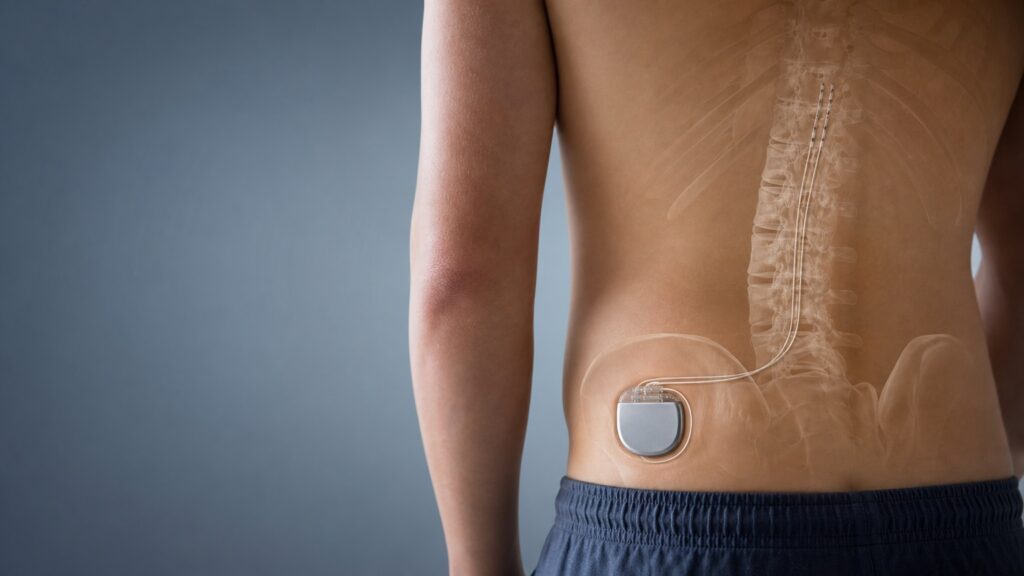
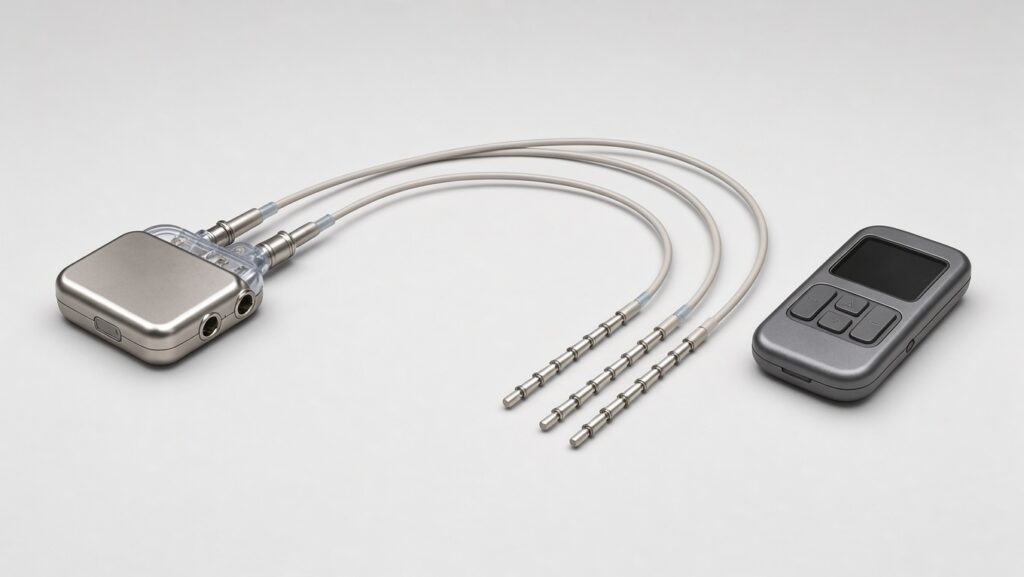
Spinal cord stimulators use implanted leads to deliver electrical impulses near the spinal cord. The goal is to interrupt pain signals and provide relief when other treatments haven’t worked.
When these systems malfunction, patients can experience painful stimulation, loss of pain relief, and complications requiring additional medical treatment.
Some of the most serious injuries under investigation include the following.
Lead Fracture and Migration
A lead fracture occurs when one of the implanted wires breaks or becomes damaged. Lead migration happens when a wire shifts away from its intended position.
Either problem can interfere with stimulation and leave patients experiencing unexpected pain or a loss of relief.
Some patients need another surgery to reposition, replace, or remove the affected leads.
Lead fractures and migration are particularly important in spinal cord stimulator lawsuits because medical imaging, operative reports, and device records can help show exactly what went wrong.
Severe Electrical Shocks
Some patients have reported sudden, painful electrical shocks after receiving a spinal cord stimulator.
Instead of the controlled stimulation the device is designed to provide, they experience jolting or painful sensations that can interfere with everyday activities and require medical treatment.
Our current investigation focuses particularly on electrical shocks serious enough to require hospitalization.
Medical records and device testing can help identify the cause and determine whether the manufacturer is responsible.
Second- and Third-Degree Burns
Serious burns are another category of injury we’re investigating.
Second-degree burns damage the outer skin layer and part of the tissue beneath it. Third-degree burns extend through the full thickness of the skin and can cause permanent damage.
Patients who experienced significant burns after receiving a spinal cord stimulator should have their medical records reviewed to determine what caused the injury.
Bladder and Bowel Dysfunction
Damage to the spinal cord or surrounding nerves can interfere with bladder and bowel control.
Some of the conditions being evaluated in spinal cord stimulator cases include urinary retention, urinary incontinence, fecal incontinence, and severe bowel dysfunction.
These symptoms can have several medical causes. Our attorneys work with the available medical evidence to determine whether an implanted device or a related complication contributed to the injury.
New loss of bladder or bowel control, particularly when accompanied by weakness or numbness, requires immediate medical attention.
Gastroparesis and Cardiac Arrhythmias
We’re also reviewing certain cases involving gastroparesis and cardiac arrhythmias.
Gastroparesis occurs when the stomach empties more slowly than normal, sometimes causing persistent nausea, vomiting, and difficulty eating.
Cardiac arrhythmias involve abnormal heart rhythms and can cause palpitations, dizziness, and other serious symptoms.
Because these conditions have many possible causes, establishing a connection to a spinal cord stimulator requires a careful review of the patient’s medical history and device-related complications.
Paralysis and Permanent Neurological Injuries
Permanent neurological damage is among the most serious complications being investigated.
Injuries may involve paralysis, permanent weakness, loss of sensation, or other forms of motor impairment.
Conditions such as paraplegia, quadriplegia, incomplete spinal cord injury, and certain spinal cord injury syndromes can dramatically change a person’s ability to work, move independently, and manage daily activities.
When these injuries occur after implantation or a device complication, our attorneys investigate the medical evidence to determine what caused the damage and who may be responsible.
Additional Surgery to Repair or Remove Leads
Many spinal cord stimulator cases involve patients who needed another procedure because implanted leads fractured, migrated, or stopped functioning properly.
That surgery may involve repositioning, replacing, or removing the leads.
There’s an important distinction between surgery to address a failed implanted lead and routine generator or battery replacement. Our attorneys review the operative reports to determine why the procedure was necessary.

Which Spinal Cord Stimulator Manufacturers Are Facing Lawsuits?
Several major medical device manufacturers are facing spinal cord stimulator lawsuits. Although the cases involve similar injuries, each manufacturer’s products and conduct are being examined separately.
Abbott and St. Jude Medical Spinal Cord Stimulator Lawsuits
Abbott manufactures spinal cord stimulation systems, including devices sold under the Proclaim and Eterna names.
Abbott acquired St. Jude Medical in 2017, which means patients may see either company name in their implantation records.
Patients are suing Abbott over spinal cord stimulator complications involving device failures, inadequate safety warnings, and alleged violations of federal medical device requirements.
The lawsuits also examine the company’s handling of device modifications and the role of manufacturer representatives in programming certain devices.
Boston Scientific Spinal Cord Stimulator Lawsuits
Boston Scientific manufactures spinal cord stimulation systems, including Precision and WaveWriter devices.
Patients have filed lawsuits involving unexpected stimulation, fractured leads, device failures, and additional surgeries.
In 2026, Boston Scientific also recalled certain unused Infinion CX leads because of concerns about mechanical stress and lead fractures.
The federal litigation is examining whether problems with certain Boston Scientific devices and their warnings contributed to patients’ injuries.
Nevro Spinal Cord Stimulator Lawsuits
Nevro developed spinal cord stimulation systems sold under the Senza and HFX names.
Patients are suing Nevro over device failures, electrical stimulation problems, lead complications, and injuries requiring additional treatment.
The lawsuits also challenge aspects of the company’s regulatory compliance, product modifications, and safety warnings.
Medtronic Spinal Cord Stimulator Lawsuits
Medtronic manufactures spinal cord stimulation systems, including Intellis and Vanta devices.
Patients with serious complications involving Medtronic stimulators may have grounds to pursue product liability claims, depending on what happened and the evidence available.
Unlike Abbott, Boston Scientific, and Nevro, Medtronic was not part of a dedicated manufacturer-specific spinal cord stimulator MDL as of October 26, 2026.
Our attorneys can review Medtronic cases individually to determine whether further investigation is warranted.
What Is the Latest Status of Spinal Cord Stimulator Lawsuits in 2026?
As of October 26, 2026, spinal cord stimulator lawsuits against Boston Scientific, Abbott, and Nevro are moving forward in three separate federal multidistrict litigations (MDLs).
An MDL brings lawsuits involving the same manufacturer and similar issues before one federal judge for coordinated pretrial proceedings.
This allows the courts to manage evidence, discovery, and other common issues more efficiently while preserving each patient’s individual claim.
| Manufacturer | MDL | Federal Court |
|---|---|---|
| Boston Scientific | MDL 3181 | Central District of California |
| Abbott | MDL 3194 | Northern District of Illinois |
| Nevro | MDL 3195 | Northern District of California |
Boston Scientific MDL 3181
The federal panel established the Boston Scientific MDL on June 5, 2026, and assigned it to Judge Josephine L. Staton in the Central District of California.
The proceeding brings together federal lawsuits involving Boston Scientific spinal cord stimulation systems.
On October 23, 2026, plaintiffs filed a master personal injury complaint outlining their claims against the company. The litigation remains in the pretrial stage.
Abbott MDL 3194
The Abbott MDL was established on October 2, 2026, in the Northern District of Illinois before Judge Lindsay C. Jenkins.
The lawsuits focus on alleged device defects, safety warnings, regulatory compliance, and the company’s conduct involving certain spinal cord stimulation systems.
The court began establishing procedures for the coordinated litigation in October 2026.
Nevro MDL 3195
The Nevro MDL was also established on October 2, 2026.
The cases are proceeding in the Northern District of California before Judge Haywood S. Gilliam Jr.
The litigation brings together federal claims involving Nevro spinal cord stimulators and questions about product safety, device modifications, and regulatory requirements.
You can review the federal transfer orders through the U.S. Judicial Panel on Multidistrict Litigation.
For ongoing developments, visit Lawsuit Legal News’ spinal cord stimulator lawsuit coverage.
Is a Spinal Cord Stimulator Lawsuit a Class Action?
No. The federal cases discussed above are coordinated through multidistrict litigation, which is different from a class action.
In an MDL, each patient maintains an individual lawsuit. The court coordinates common pretrial issues, but injuries, medical expenses, and compensation are evaluated individually.
This matters because one patient may have needed a relatively limited revision procedure while another may be dealing with permanent neurological damage.
Have Spinal Cord Stimulator Lawsuits Settled?
There is no verified global settlement resolving the three manufacturer-specific federal MDLs as of October 26, 2026.
The lawsuits are still moving through the courts, and there is no established average settlement payout.
Our attorneys can explain the current litigation status and what it means for someone considering a claim.
Have Any Spinal Cord Stimulators Been Recalled?
Yes. In 2026, the FDA announced a Class I recall involving certain Boston Scientific Infinion CX leads.
Class I is the FDA’s most serious recall classification. It is used when a product problem creates a reasonable probability of serious injury or death.
The recall involves concerns that mechanical stress near the lead anchor site could cause the leads to fracture or develop abnormal electrical impedance.
According to the FDA, Boston Scientific had reported 1,081 serious injuries and no deaths associated with the issue as of May 27, 2026.
Which Boston Scientific Leads Were Recalled?
The recall covers these Infinion CX lead kits:
| Product | Model |
|---|---|
| Infinion CX Lead Kit, 50 cm | SC-2317-50 |
| Infinion CX Lead Kit, 70 cm | SC-2317-70 |
Boston Scientific initiated the recall on June 17, 2026.
The recall applies to unused affected leads. The FDA has not directed patients to have previously implanted leads removed because of this recall.
Patients with implanted devices should continue following their treating physician’s recommendations.
Read the full FDA announcement about the Boston Scientific Infinion CX recall.
Can I File a Lawsuit if My Device Was Never Recalled?
Yes. A device does not have to be recalled for its manufacturer to face a product liability lawsuit.
Many defective product claims involve devices that remain on the market.
What matters is whether the evidence supports a legal claim that the product or manufacturer’s conduct caused your injury.
Why Are Spinal Cord Stimulator Manufacturers Being Sued?
Patients are suing spinal cord stimulator manufacturers over defective products, inadequate warnings, and failures to comply with medical device safety requirements.
The lawsuits focus on several areas of manufacturer responsibility.
Defective Design and Manufacturing
Medical device manufacturers are responsible for designing and manufacturing products that meet applicable safety requirements.
A design defect involves a problem with how a product was designed. A manufacturing defect occurs when a particular device or component does not meet its intended specifications.
In spinal cord stimulator cases, attorneys examine lead construction, device performance, engineering records, and evidence of component failures.
Failure to Warn Patients and Physicians
Manufacturers must provide appropriate warnings about significant risks associated with their products.
Spinal cord stimulator lawsuits examine whether manufacturers adequately disclosed known complications and provided healthcare professionals with the information needed to make informed treatment decisions.
Attorneys also investigate when companies learned about safety problems and how they responded.
FDA Regulatory Violations
Spinal cord stimulators are generally regulated as Class III medical devices, which are subject to extensive FDA oversight.
Some lawsuits challenge whether manufacturers followed federal requirements when modifying devices, reporting safety problems, or managing other regulatory obligations.
These issues can be especially important because federal law limits certain state-law claims involving FDA-approved medical devices.
Does FDA Approval Protect a Manufacturer From Being Sued?
Not in every situation.
FDA premarket approval can limit certain product liability claims, but it does not give manufacturers complete immunity from lawsuits.
Claims based on violations of applicable federal requirements may still be available when they also satisfy the governing state law.
Our attorneys examine the device’s regulatory history and the manufacturer’s conduct to determine which claims can be pursued.
What Compensation Is Available in a Spinal Cord Stimulator Lawsuit?
A serious spinal cord stimulator injury can leave someone facing additional surgeries, ongoing medical expenses, missed work, and permanent physical limitations.
A lawsuit can seek compensation for the financial and personal losses caused by the injury.
Depending on the case, recoverable damages may include:
- Emergency care, hospitalization, and specialist treatment
- Surgery to repair, replace, or remove implanted leads
- Rehabilitation and future medical expenses
- Lost wages and reduced earning capacity
- Pain and suffering
- Emotional distress
- Permanent disability and loss of enjoyment of life
In qualifying cases involving a death, surviving family members or the estate may also have grounds to pursue compensation.
How Much Is a Spinal Cord Stimulator Lawsuit Worth?
There is no established average payout for the current spinal cord stimulator MDLs.
Our attorneys evaluate what the injury has cost you, how much medical treatment you’ve needed, whether you’ll require future care, and how the injury has changed your daily life.
A patient who needed surgery to replace a fractured lead may have very different damages from someone who suffered permanent paralysis.
The strength of the evidence against the manufacturer also matters.
We can review your circumstances and explain which types of compensation may be available.
What Evidence Is Needed for a Spinal Cord Stimulator Lawsuit?
Medical records are the starting point for most spinal cord stimulator claims.
Our attorneys look for documentation showing which device was implanted, what complications developed, and what treatment was necessary.
Important records include:
- The original implantation report
- Device identification cards and manufacturer information
- Emergency room and hospitalization records
- Imaging showing fractured or migrated leads
- Device testing and programming records
- Surgical reports involving lead revision or removal
- Records documenting ongoing symptoms or permanent injuries
You don’t need to collect every record before contacting us. Our legal team can help identify what is needed and how to obtain it.
Should I Keep My Spinal Cord Stimulator if It Is Removed?
If your doctor recommends removing or replacing implanted leads, tell your attorney as soon as reasonably possible.
The removed components may provide important evidence about a suspected defect.
An attorney can work with the healthcare facility to determine whether the components can be preserved.
Never delay necessary medical treatment to preserve a device.
Even if the components are no longer available, surgical records, imaging, and other medical documentation can still be valuable.
Can FDA Adverse-Event Reports Help My Case?
Yes. Reports submitted to the FDA can help attorneys investigate patterns of device problems and identify safety concerns involving particular products.
However, an individual report is not proof that a device caused a specific injury. It must be considered alongside medical records, device evidence, and other information.
Learn more about the FDA’s medical device reporting system.
How Long Do I Have to File a Spinal Cord Stimulator Lawsuit?
Every state has filing deadlines that limit how long injured patients have to bring a lawsuit.
The deadline can depend on where the claim is filed, the type of legal claim, and when the injury occurred.
Because some spinal cord stimulator complications develop long after implantation, it’s important to have an attorney review the timeline rather than assume you have plenty of time.
What Is the Statute of Limitations in Florida?
Florida generally allows four years to file a qualifying personal injury claim based on the design, manufacture, distribution, or sale of a product, under Florida Statutes § 95.11(3)(d).
Other claims arising from the same circumstances can have shorter deadlines. Florida generally applies a two-year period to negligence and wrongful death actions.
Different states have different rules, and some claims may be subject to additional time limits.
Does the Deadline Start When the Device Was Implanted?
Not necessarily.
In some jurisdictions, the date a patient discovered or reasonably should have discovered an injury and its cause can affect the filing deadline.
Other states have stricter rules, including statutes of repose that may limit claims after a certain period.
Our attorneys can review your implantation date, medical history, and injury timeline to determine which deadlines apply.
The 2018 implantation cutoff for our current investigation is separate from the legal filing deadline.

Why Choose Dolman Law Group for a Spinal Cord Stimulator Lawsuit?
Spinal cord stimulator cases are not ordinary injury claims.
They can involve complicated medical histories, federal medical device regulations, engineering evidence, and manufacturers with substantial legal resources.
You need attorneys who understand how to investigate serious injuries and handle complex litigation.
16 Attorneys With More Than 200 Years of Combined Experience
Dolman Law Group has 16 attorneys with more than 200 years of combined legal experience.
Our team handles complex personal injury and mass tort cases involving catastrophic injuries, disputed liability, and significant long-term damages.
We know how important it is to investigate the evidence thoroughly while keeping our clients informed about what is happening with their cases.
More Than $700 Million Recovered for Injured Clients
Dolman Law Group has recovered more than $700 million for clients across the firm’s practice areas.
That figure represents firmwide results, not spinal cord stimulator settlements. Past results do not guarantee a similar outcome.
A Legal Team That Listens
If you’re dealing with a serious spinal cord stimulator complication, you’ve probably already spent enough time talking to doctors, undergoing tests, and trying to understand what went wrong.
We don’t expect you to arrive with all the answers.
Our job is to listen, investigate the facts, explain your options, and handle the legal process while you focus on your health.
How Can a Spinal Cord Stimulator Lawyer Help You?
A spinal cord stimulator lawyer investigates what happened, identifies the companies that may be responsible, and builds the evidence needed to pursue compensation.
At Dolman Law Group, that work can include obtaining medical records, identifying the device and its components, reviewing FDA information, consulting medical and technical experts, and evaluating the manufacturer’s conduct.
If your case moves forward, our attorneys determine where the lawsuit should be filed and whether it belongs in an existing MDL.
We also evaluate your damages, handle litigation-related communications, and pursue compensation through settlement negotiations or the courts.
What Does It Cost to Speak With a Spinal Cord Stimulator Lawyer?
Dolman Law Group offers free initial consultations for spinal cord stimulator injury claims.
We’ll review what happened, explain whether your case warrants further investigation, and discuss the next steps.
If we agree to represent you, we’ll explain the fee arrangement and any responsibility for litigation expenses before representation begins.
Frequently Asked Questions About Spinal Cord Stimulator Lawsuits
Can I sue if my spinal cord stimulator stopped working?
A device that simply stops relieving pain may not be enough to support a lawsuit. However, if a defect caused a serious injury or required additional surgery, our attorneys can investigate what happened.
Can I file a lawsuit if my spinal cord stimulator was removed?
Yes. In fact, removal or revision surgery involving a defective lead can be important evidence in a spinal cord stimulator lawsuit.
Do I need to know my spinal cord stimulator’s model number?
No. Your implantation records or device identification card should help identify the manufacturer and model, and our attorneys can help obtain that information.
Can I sue if my spinal cord stimulator was never recalled?
Yes. A recall is not required to file a product liability lawsuit against a medical device manufacturer.
Can I file a lawsuit if my doctor recommended the device?
Yes. A doctor’s recommendation does not prevent you from suing a manufacturer over a defective device that caused an injury.
What if my injury occurred years after implantation?
You may still have a case. Filing deadlines vary by state, so an attorney should review when the injury occurred and which laws apply.
Are Abbott and St. Jude Medical the same company?
Abbott acquired St. Jude Medical in 2017. Depending on when your device was implanted, your medical records may identify either company.
Are Medtronic lawsuits included in the spinal cord stimulator MDLs?
No. As of October 26, 2026, the three dedicated federal MDLs involved Boston Scientific, Abbott, and Nevro, not Medtronic.
Will I have to travel to court?
Not necessarily. Your attorney can handle much of the legal process, although some cases require clients to participate in depositions, examinations, hearings, or trials.
How can I find out if I qualify for a spinal cord stimulator lawsuit?
Contact Dolman Law Group for a free consultation. We’ll review your device, medical complications, and treatment history to determine whether your case warrants further investigation.
Speak With a Spinal Cord Stimulator Lawsuit Lawyer Today
If you suffered a serious injury after receiving a spinal cord stimulator, you deserve answers about what went wrong and whether the manufacturer should be held responsible.
Dolman Law Group is investigating spinal cord stimulator claims involving Abbott, Boston Scientific, Medtronic, Nevro, and St. Jude Medical devices.
You don’t need to know whether your device was defective before contacting us. That’s part of what our attorneys investigate.
Contact Dolman Law Group today for a free, confidential consultation. We’ll listen to what happened, review your circumstances, and explain your legal options.
