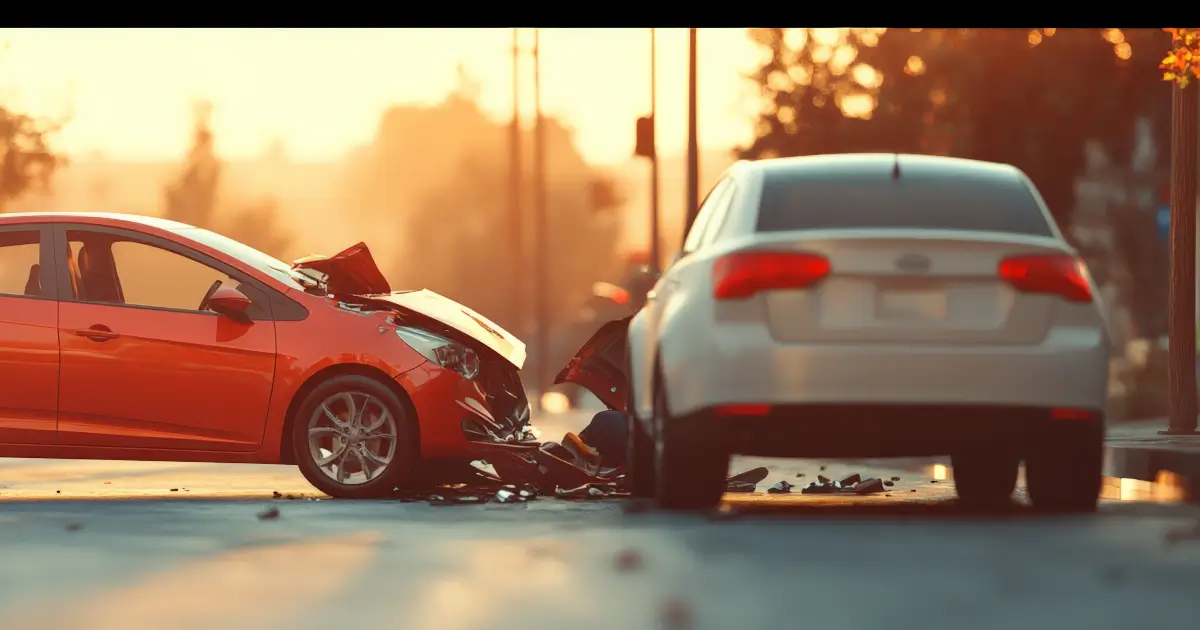



Failure to yield crashes are among the most common causes of serious intersection and merging accidents, and the driver who had the duty to yield is typically found at fault. Fault is not always one-sided, though. Both drivers’ actions, including speed and timing, can affect how liability is divided.
Quick Facts About: Failure to Yield Accidents
- Turns and merges require careful timing: Drivers can cause a crash by entering another vehicle’s path before it is safe.
- Both drivers may share fault: Having the right of way does not excuse other unsafe driving that contributed to the collision.
- Pedestrians and cyclists face serious harm: They have little protection when a driver fails to let them cross safely.
- Some situations require extra precautions: Approaching emergency vehicles and stopped school buses can require drivers to yield or stop.
- Evidence may not remain available: Camera footage can be erased, and witnesses’ memories can fade.
Coming to a stop does not always mean a driver has yielded. Pulling out before traffic clears can still put someone directly in another vehicle’s path. After a collision, that distinction can matter when each driver gives a different account of who had the right to proceed.
Waiting to gather evidence can make the other driver’s account harder to challenge. The key issues are who should have yielded, how responsibility is established, and which losses may qualify for compensation.
What Exactly Is a Failure to Yield Accident?
A failure to yield accident occurs when a driver causes a collision by failing to let someone with the right of way pass safely. Yielding means waiting or slowing down to let that person pass safely. It requires a complete stop, when necessary, even if there is no stop sign.
The mistake is often treating a brief pause as enough. A driver may stop, look, and then pull into an approaching vehicle’s path before there is sufficient room. What matters is whether the driver allowed the other road user to proceed safely.
How Do Failure to Yield Crashes Happen?
Failure to yield crashes happen when a driver moves into someone else’s path before it is safe to proceed. Sometimes the driver misjudges an opening; other times, attention stays in one direction while a hazard approaches from another. The scenarios below are the ones that arise most frequently, along with how each tends to unfold.
Left Turns
A left-turn crash can begin with a driver misjudging how quickly an oncoming vehicle will reach the intersection. The driver expects to complete the turn before the oncoming car arrives. The oncoming driver has little room to brake or steer clear.
Stop Signs
At a stop sign, rolling forward during a brief traffic check can put a driver into the intersection before he or she assessed approaching vehicles. Cross traffic may have no stop sign, making the driver think there is no reason to slow down. Skipping the full stop reduces the opportunity to judge distance and speed before moving into the intersection.
Four-Way and All-Way Stops
All-way stops tend to break down when two drivers arrive in close succession, and each assumes priority. One misjudges the order of arrival and moves into the path of a driver, making the same assumption. The resulting collision usually occurs at low speed, near the center of the intersection.
Merging or Pulling Out into Traffic
Merging collisions occur when a driver enters an established flow of traffic without matching the speed of drivers in the other lane or leaving adequate space. Entering from a driveway, parking lot, or on ramp, the driver forces faster vehicles already in the lane to brake or maneuver around them. When those drivers cannot adjust in time, the entering vehicle could get struck or clipped.
Failure to Stop at a Crosswalk
A driver turning right may look left for approaching cars and begin moving without checking the crosswalk ahead. A pedestrian can be directly in the turning vehicle’s path even though the driver sees a clear road. Passing a car stopped at a crosswalk creates another danger because that car may conceal someone crossing.
Failure to Yield to Emergency Vehicles
Collisions involving emergency vehicles often result from a delayed or unpredictable reaction as these vehicles approach. Rather than slowing and moving aside in a steady, predictable manner, the driver brakes abruptly or drifts into the path of the emergency vehicle. It is the sudden, unanticipated movement, more than the presence of the emergency vehicle itself, that causes the crash.
Backing Out of a Parking Spot
A driver reversing from a parking spot may begin moving while parked vehicles still block the view of the aisle. An approaching car or pedestrian becomes visible only after the rear of the vehicle extends into their path. Continuing to reverse without pausing to check the newly visible area can result in a collision.
These details help separate an unavoidable conflict from a driver’s failure to notice and respond to approaching traffic. Establishing what each person could see and when they moved becomes central to assessing responsibility.
Who May Be Liable for a Failure to Yield Crash?
In most failure to yield crashes, the driver who had the duty to yield is the one held liable, because their decision to proceed is what caused the collision. That is the starting point, not the full picture. Fault is ultimately based on who had the right of way and who disregarded right-of-way rules.
These are the parties that are usually held liable for failure to yield crashes:
- The driver who failed to yield: This is the core issue in most failure to yield crashes.
- A second driver: A driver whose speeding, distraction, or other unsafe conduct contributed to the crash could also be held liable.
- An employer: If the at-fault driver was working at the time of the crash, their employer could be held liable. For example, this could happen if the driver was making a delivery or driving for a rideshare service.
- A government entity: These entities could be at fault if a missing sign, obscured signal, or poor intersection design made it harder for drivers to know who had the right of way.
What If the Other Driver Says They Had the Right of Way?
The other driver saying they had the right of way does not make their account more convincing than yours. Both accounts need to be checked against what happened. Someone may remember having a green light without recognizing that they still needed to wait before turning.
Camera footage or an independent witness can help resolve that disagreement by showing which signal was active or who entered the intersection first. When the evidence leaves room for doubt, the parties may negotiate a settlement, or a judge or jury may ultimately decide.
Can More Than One Driver Be at Fault for a Failure to Yield Crash?
Yes. One driver may fail to yield while another driver’s actions also contributed to the collision. For example, a driver may pull onto a road without enough clearance, while an approaching driver’s excessive speed makes the crash harder to avoid.
Under comparative fault rules, each driver receives a share of responsibility based on how their conduct contributed to the collision.
Right of Way Laws: A Legal Duty of Care All Drivers Are Expected to Follow
Right-of-way rules tell drivers when they must wait and when they may proceed. Drivers must follow those rules while still paying attention to the danger around them. However, you can still be held liable for a collision that happened while you had the right of way if you failed to use reasonable care.
Entering Intersections
The signs and signals facing a driver determine when they may enter an intersection. Even with a green light, a driver must allow vehicles already lawfully crossing to clear the way. Where there are no signs or signals, drivers arriving at roughly the same time generally yield to traffic approaching from their right.
Merging & Changing Lanes
The driver moving into another lane is generally responsible for finding a safe opening. Using a turn signal tells nearby drivers what they intend to do, but it does not require those drivers to give up their lane. Where lanes merge, posted signs and road markings help determine who must wait.
Entering or Leaving Traffic
A driver pulling out of a driveway, alley, or parking lot generally must wait for approaching traffic and pedestrians crossing the entrance. When leaving the road, the driver must also yield to anyone whose path they need to cross and who has priority. Turning into private property does not give a driver priority over people using the sidewalk.
Yielding to Other Vehicles
When an emergency vehicle approaches the required warning signals, drivers generally must pull aside and stop safely without blocking an intersection. Drivers are also required to yield to school buses when activated red lights and a stop arm are activated. Whether traffic on the opposite side must also stop depends on the road layout and applicable requirements.
Yielding to Vulnerable Road Users
Drivers must let pedestrians cross where they have the right of way, which can include crossings without painted lines. Cyclists generally have the same right to proceed as other vehicle operators, so a turning driver may need to wait for a cyclist who is traveling straight. Even when a pedestrian or cyclist makes a mistake, a driver must still take reasonable action to avoid hitting them.
The practical question is what each person was entitled to do at that moment.
Key Evidence You Need to Prove a Failure to Yield Claim
Proving a failure to yield claim requires evidence showing who had priority and how the collision happened:
- Camera footage: Dashcams and nearby security cameras may show the vehicles’ movements or traffic signals, depending on the camera angle.
- Vehicle positions and damage: Attorneys can use pictures of the vehicles and the scene to determine where they stopped and reconstruct the rest of the crash.
- Witness statements: An independent witness may have seen a signal change or a driver enter the intersection without waiting.
- Skid marks: Tire marks can help a reconstruction specialist assess braking and movement before impact, taking road conditions and traction into account.
Preserving footage and scene photos early gives investigators more to work with when they examine a disputed account.
Frequently Asked Questions About Failure to Yield Accidents
Is the driver turning left always at fault in a failure to yield accident?
No. A left-turning driver may have had a protected green arrow while the oncoming driver entered against a red light. In that situation, evidence of the signal sequence can challenge the assumption that the turning driver should have waited.
What if two cars arrived at the intersection at the same time and neither yielded?
Two cars arriving together do not automatically make both drivers equally responsible. The intersection’s controls, the vehicles’ directions, and any intended turns determine which driver should have waited. If arrival timing remains disputed, an insurer’s proposed division of fault can be challenged with evidence rather than accepted as a default split.
Does it matter if the pedestrian was jaywalking in a failure to yield accident?
A pedestrian’s crossing location and signal compliance can affect responsibility, but “jaywalking” alone does not establish fault. An unmarked crossing may still be a lawful crosswalk, so the absence of painted lines does not settle the issue. The pedestrian’s conduct and the driver’s opportunity to respond both need examination.
What if the other driver was speeding and that’s why I didn’t have time to yield?
The other driver’s speed matters if it affects the available gap or the opportunity to avoid the collision. A reconstruction specialist may assess whether the turn or crossing would have been safe had the approaching vehicle traveled at a reasonable speed. That connection matters more than simply proving the driver exceeding the limit.
Can a failure to yield accident happen in a parking lot, not just on the road?
Yes. A failure to yield accident can happen where parking aisles meet, at an exit, or while a vehicle backs out. Traffic rules may apply differently on private property, but drivers still owe reasonable care to others. A claim can therefore remain possible even if police do not issue a traffic citation.