
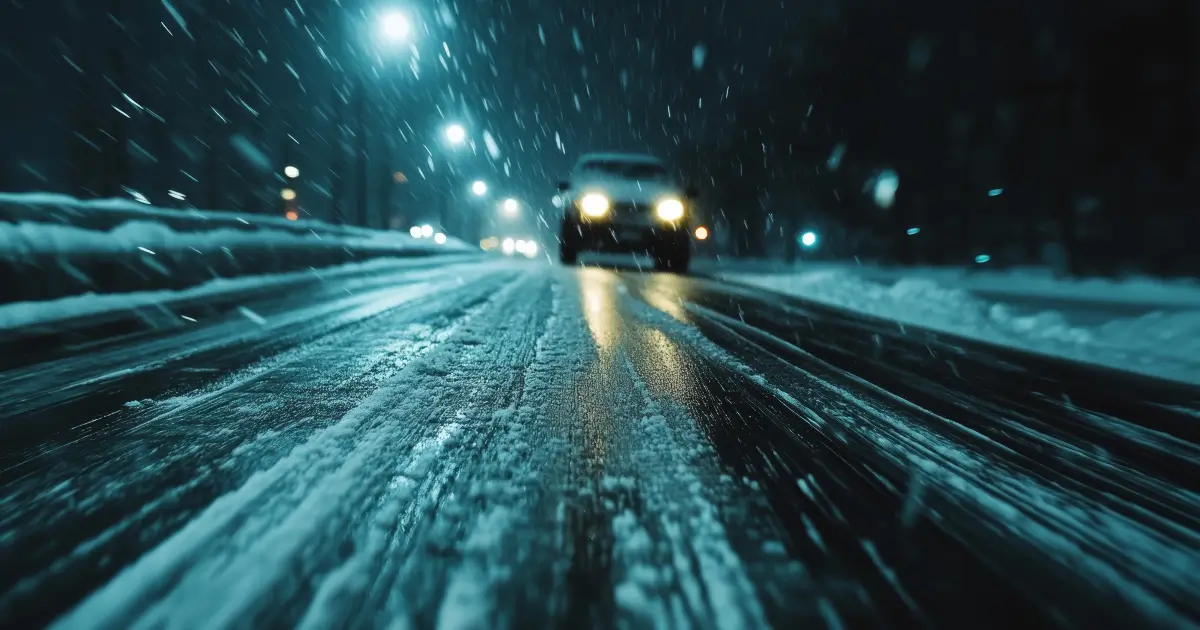



Black ice may be invisible, but drivers have a duty to use reasonable care when freezing conditions are likely to create black ice. Drivers could be held liable for failing to adjust their speed or following distance. A government entity may also bear responsibility for a known, recurring roadway hazard it failed to fix or warn others about.
A black ice crash may leave a few obvious clues when the ice disappears. Insurers and attorneys for the victim will need to take a closer look at the weather, the roadway, each driver’s choices, and any earlier problems at that location.
Evaluating a crash becomes much harder as time passes. Traffic resumes, crews may treat the road, and rising temperatures can change the condition at the center of the claim.
How Do Black Ice Crashes Happen?
Most drivers do not realize that the pavement can freeze solid even when their dashboard thermometer reads 35 or 36 degrees. Air warms up much faster than cold asphalt, especially in early morning hours. When lingering rain, melting snow, or simple condensation hits freezing ground, it glazes into a clear sheet that is hard for drivers to see.
Elevated bridges and overpasses freeze well ahead of ground-level highways because freezing air circulates against both the top and bottom of the roadbed. Shaded curves and areas with poor roadside runoff stay slick long after the rest of the route dries out. When motorists treat these trouble spots like dry pavement, they leave themselves zero margin for error.
What Makes Black Ice So Dangerous?
Black ice is especially dangerous because it may look harmless. Snow or slush gives a driver an obvious reason to ease off the accelerator, but drivers often do not respond to a wet-looking patch of road. Drivers often do not know of the danger until they brake or steer while passing over the black ice.
These are some of the main reasons why black ice can be so dangerous:
- Stopping takes more distance: Pressing the brake normally may not slow the vehicle as quickly as expected. This gives drivers less time to slow down or stop before colliding with other vehicles or hazards.
- Steering becomes less reliable: Tires do not grip black ice very well, causing them to slide and not respond to the driver’s inputs.
- Quick corrections can backfire: Hitting the brakes hard or turning sharply can make the car more difficult to control once a slide begins.
- Speed leaves less room to recover: At higher speeds, a vehicle covers more ground before the driver can recognize the problem and respond.
Can a Driver Be Liable for a Black Ice Accident?
Yes. A driver may be liable even if he or she did not see the ice before the crash. Fault often depends on whether the weather and road conditions gave the driver reason to slow down, leave more space, or take other precautions.
Drivers cannot avoid hazards they cannot see, yet posted limits apply strictly to specific road conditions. Traveling at 65 mph on wet asphalt that is near the freezing point greatly increases the chance of losing control. Tailgating under these conditions leaves virtually no room to stop safely once traffic ahead begins to slide.
When Could a Government Entity Be Responsible for a Black Ice Crash?
A government entity may be responsible for a black ice crash if the entity knew or should have known about recurring ice and failed to respond reasonably. The important questions are about what officials knew, when they learned it, and what opportunity they had to act:
- History at the location: Earlier complaints, crash reports, inspections, or repeated treatment may show that the same area had frozen before.
- Time to respond: Even if there was a report of black ice shortly before the crash, a government entity may not be liable. However, repeated warnings are a different story, as it could be argued there was reasonable time to fix the road to make it safer.
- Treatment or Warnings: Maintenance records can show whether crews inspected the road, applied salt or sand, or used temporary warnings. A missing treatment entry alone does not prove that the response was unreasonable.
- Connection to the collision: Even when a response appears inadequate, that failure must be connected to the crash.
Claims against government entities are often more complex due to immunity rules, notice requirements, and filing deadlines. Those rules vary by jurisdiction, which is why crash victims need an attorney with detailed knowledge of the appropriate rules.
What if Black Ice Leads to a Multi-Vehicle Pileup or Chain-Reaction Crash?
Black ice frequently triggers chain-reaction pileups when following motorists cannot brake or steer around vehicles that have already spun out.
Crash investigators evaluate the entire collision chain by analyzing traveling speeds, following distances, and each driver’s line of sight. The motorist who triggers the initial slide is not automatically liable for every subsequent impact on the road. Responsibility is divided based on physical evidence and the specific comparative negligence rules governing the claim.
Evidence That Matters in a Black Ice Accident Claim
Victims of black ice crashes need evidence that establishes road conditions and explains what drivers or road authorities did before the crash. Since the ice may melt before it is photographed, you will need other sources of evidence, such as:
- Weather and temperature records: These records help to establish weather conditions at the time of the crash. A weather report cannot establish the condition of one exact patch of road, but it can show whether ice could have formed.
- Road maintenance records: Inspection logs, treatment schedules, complaints, and incident reports can reveal what the authorities knew and what steps they took to reduce crash risk.
- Dashcam footage: Black ice may be difficult to see in a recording, too. Even so, footage can capture the road’s appearance, vehicle movement, surrounding traffic, and a driver’s actions before the impact.
- Cell phone data: Call, message, app, and location data can help to create a timeline of events and may indicate whether a driver was distracted. Standard phone records do not capture every activity, and your attorney may need to make a formal request for these records.
- Witness accounts: Someone who traveled on the same road shortly before the crash may remember slick areas, vehicles sliding, warnings, or road treatment. Witness statements can be especially important after the condition of the road changes.
These pieces of evidence become stronger when they support one another.
Frequently Asked Questions About Black Ice Car Accidents
What if I lost control on black ice and hit a stationary object?
Depending on the circumstances, responsibility may fall on a government entity that failed to treat or warn about an icy stretch of road.
Can I still hold a driver responsible if neither of us saw the ice?
Yes, drivers can still be held responsible even if neither one of them saw the black ice beforehand. Fault typically depends on whether the driver was going too fast or following too closely for the conditions, not on whether drivers saw the hazard.
What if drainage or runoff from a business or private property caused black ice to form on the road?
A business or property owner may bear some responsibility if runoff from their property regularly freezes on a nearby road. This is different from a claim against a driver or government entity, since it centers on whether the property owner knew about the drainage problem and failed to fix it. These claims often require evidence tied specifically to the property itself.
How do multi-vehicle pileups on black ice affect who is at fault?
Multi-vehicle pileups tend to make fault more complicated because more than one driver’s actions can contribute to the chain of collisions. Investigators often look at the distance, timing, and each vehicle’s point of impact to sort out responsibility. It is common for fault to be divided among multiple drivers rather than assigned to just one.
Can weather reports help prove my black ice crash claim?
Yes, weather and temperature records can be valuable evidence in a black ice crash claim. Historical data can confirm that conditions at the time and location of the crash were cold enough for ice to form, supporting the argument that the hazard was foreseeable. These records are often available from official weather stations and can be requested after a crash.
Is there a claim if the police did not issue a citation to the other driver because of the weather?
Yes, a claim can still move forward even without a citation being issued. Officers sometimes decline to cite a driver when weather conditions were a factor, but that decision does not determine legal fault in a personal injury claim. Other evidence, like driving behavior and road conditions, can still establish responsibility.